


LEISURE ACTIVITIES - How retirees can get involved in Gardening.


Here’s a clear, friendly guide on why older adults should take up gardening as a pastime
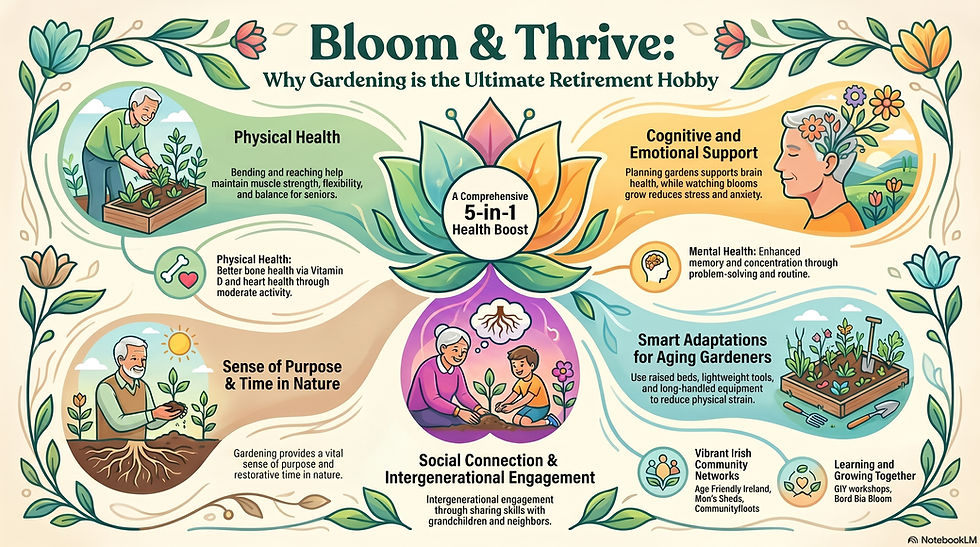
Gardening is one of the most rewarding activities for older adults because it combines physical activity, mental stimulation, social engagement, and a connection with nature. Research has shown that regular gardening can contribute to healthier and more satisfying later years.
Why Gardening Is Especially Valuable in Retirement
For many retirees, gardening provides a unique combination of:
Physical exercise
Mental stimulation
Social interaction
Purpose and achievement
Time outdoors in fresh air and sunlight
Very few hobbies deliver all five benefits at the same time. Whether it's a few pots on a balcony or a large vegetable plot, gardening can contribute significantly to healthy, active, and fulfilling ageing.
Gardening Adaptations for Older Adults
Many older adults continue gardening well into their 80s and beyond by adapting their gardens:
Some helpful adaptations include:
Raised garden beds
Container gardening
Lightweight tools
Long-handled gardening equipment
Garden seats and kneelers
Drip irrigation systems
A relatively recent initiative in Dublin may be an alternative for some garden owners CommunityRoots
Their mission is “To transform underused spaces into thriving places, creating happy, resilient & connected communities growing, preparing and sharing food together.”
The Royal Horticultural Society Ireland (RHSI) garden in Russborough is being restored and maintained entirely by volunteers. There is always lots to be done for all levels of fitness and knowledge
The Irish national volunteering website can be found at www.volunteer.ie
Gardening combines physical activity, mental stimulation, social engagement, and a connection with nature.
Physical Health Benefits
Improved Mobility and Strength
Gardening involves a variety of movements such as bending, stretching, reaching, digging, and lifting. These activities can help:
Maintain muscle strength
Improve flexibility
Enhance balance and coordination
Reduce the risk of falls
Gentle Cardiovascular Exercise
Tasks like weeding, raking, mowing, and planting provide moderate physical activity that can:
Improve heart health
Lower blood pressure
Help manage weight
Improve endurance
Better Bone Health
Spending time outdoors exposes the body to sunlight, helping produce Vitamin D, which supports:
Stronger bones
Improved immune function
Reduced risk of osteoporosis
Mental and Cognitive Benefits
Reduced Stress and Anxiety
Working with plants has a calming effect and can:
Lower stress hormones
Reduce anxiety
Promote relaxation
Improve overall mood
Supports Brain Health
Planning a garden, choosing plants, remembering schedules, and solving gardening challenges help keep the mind active and may:
Improve concentration
Enhance memory
Support cognitive function
Sense of Purpose
Many retirees miss the structure and achievement that work once provided. Gardening offers:
Daily routines
Ongoing projects
Visible results and accomplishments
A feeling of purpose and productivity
Emotional Wellbeing
Increased Happiness
Watching plants grow and flowers bloom creates a strong sense of satisfaction and achievement.
Reduced Risk of Depression
Studies suggest that spending time in nature and engaging in meaningful activities can help reduce symptoms of depression and loneliness.
Connection to Nature
Gardening encourages mindfulness and appreciation of the changing seasons, helping people feel more grounded and connected to the world around them.
Social Benefits
Opportunities to Meet Others
Community gardens, gardening clubs, and horticultural societies provide opportunities to:
Make new friends
Share knowledge and experiences
Build social connections
Family Engagement
Gardening can become a shared activity with:
Children
Grandchildren
Neighbours
Passing on gardening skills and knowledge can be particularly rewarding.
Nutritional Benefits
Growing your own fruit, vegetables, and herbs can encourage:
Healthier eating habits
Increased consumption of fresh produce
Reduced food costs
Even a small raised bed or container garden can provide fresh herbs and vegetables
In Ireland, gardening is increasingly being promoted as a healthy and socially engaging pastime for older adults through a combination of government-supported programmes, community initiatives, and voluntary organisations.
Age Friendly Ireland Programmes
The national Age Friendly Ireland initiative supports numerous gardening projects aimed at helping older people remain active, socially connected, and independent.
Examples include:
The Ardee Garden Care & Repair Project in County Louth, which provides gardening assistance to older residents and helps them continue enjoying their gardens while living independently.
Healing Harvest in County Leitrim, which uses accessible vegetable and flower gardens to promote wellbeing, physical activity, and social engagement among older adults.
Community garden projects in Donegal and Dublin that specifically encourage older adults to grow vegetables, share skills, and participate in local social activities.
Community Gardens
Community gardens have expanded significantly across Ireland and are often supported by local authorities, residents' associations, and environmental groups.
Benefits include:
Shared gardening spaces
Reduced social isolation
Opportunities for lifelong learning
Intergenerational interaction
Many community gardens are designed with raised beds, wide pathways, and accessible seating to accommodate older gardeners.
Bord Bia Bloom
One of Ireland's best-known gardening events is the annual Bord Bia Bloom festival in Dublin's Phoenix Park.
Bloom promotes:
Gardening education
Sustainable growing practices
Community gardening
Accessible garden design
Many of its show gardens demonstrate how gardens can be adapted for older adults and people with reduced mobility.
Active Retirement and Men's Sheds Groups
Local retirement associations and Irish Men's Sheds Association groups often incorporate gardening into their activities.
These programmes can include:
Allotment gardening
Raised-bed vegetable growing
Community beautification projects
Pollinator-friendly planting schemes
Gardening provides a practical way for retired people to remain physically active while contributing to their communities.
GIY (Grow It Yourself)
GIY (Grow It Yourself) Ireland encourages people of all ages to grow food at home, in allotments, and in community spaces.
Their programmes include:
Growing workshops
Community food projects
Educational courses
Beginner gardening resources
Many retirees find food-growing particularly rewarding because it combines exercise, healthy eating, and social interaction.
Tidy Towns and Pollinator Initiatives
The SuperValu TidyTowns competition and the All-Ireland Pollinator Plan encourage local communities to create biodiversity-friendly gardens and green spaces.
Older adults frequently play leading roles in:
Community planting schemes
Wildflower projects
Heritage gardens
Environmental volunteering
Why Gardening Fits Well with Ireland's Healthy Ageing Strategy
Irish policies on positive ageing increasingly recognise gardening as an activity that can:
Support physical health
Improve mental wellbeing
Reduce loneliness
Encourage volunteering
Help older adults remain independent in their own homes for longer
As a result, many county councils now include gardening projects within their Age Friendly strategies and community development plans.
For someone approaching retirement in Ireland, gardening is one of the most widely supported and accessible hobbies available, with opportunities ranging from a few containers on a balcony to community gardens, allotments, and large-scale volunteer projects.


Comments